Photography
Ambrotype
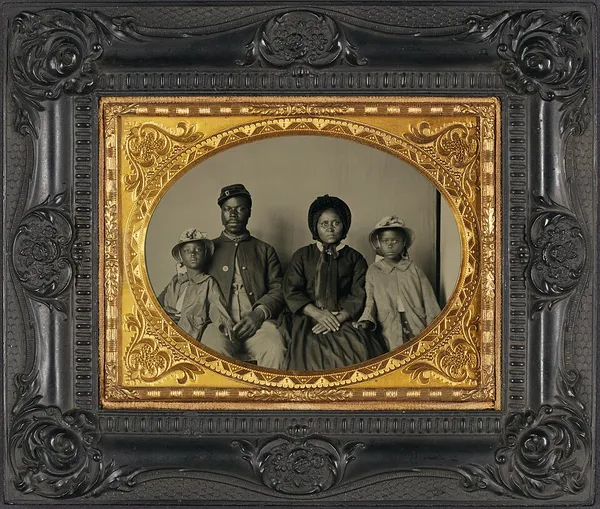
The ambrotype, also known as a collodion positive in the United Kingdom, is a positive photograph on glass made by a variant of the wet plate collodion process. As a cheaper alternative to the French daguerreotype, ambrotypes came to replace them. Like a print on paper, it is viewed by reflected light. Like the daguerreotype or the prints produced by a Polaroid camera, each is a unique original that could be duplicated only by using a camera to copy it. The ambrotype was introduced in the 1850s. During the 1860s it was superseded by the tintype, a similar photograph on thin black-lacquered iron, hard to distinguish from an ambrotype if under glass. The term ambrotype comes from Ancient Greek: ἄμβροτος ambrotos, "immortal", and τύπος typos, "impression".
Also on this shelf
Isambard Kingdom Brunel Standing Before the Launching Chains of the Great Eastern.
Exposure value.
See also
Uncatalogued shelfText from Wikipedia; plate via Wikimedia Commons. Text CC BY-SA 4.0; plate freely licensed (see Commons). Source record. Images and catalogue data are reproduced from open-access collections.