Science and Medicine
Cutaneous leishmaniasis
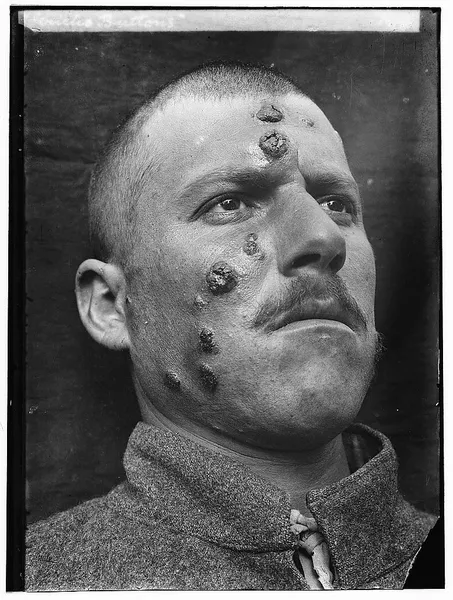
Cutaneous leishmaniasis is the most common form of leishmaniasis affecting humans. It is a skin infection caused by a single-celled parasite that is transmitted by the bite of a phlebotomine sand fly. About 30 species of Leishmania may cause cutaneous leishmaniasis. This disease is considered to be a zoonosis (an infectious disease that is naturally transmissible from animals to humans), with the exception of Leishmania tropica, which is often an anthroponotic disease (an infectious disease that is naturally transmissible from humans to vertebrate animals).
Also on this shelf
COVID-19 drug development.
Great Bend, Kansas.
See also
- ▸Assistant Secretary of Defense for Nuclear Deterrence, Chemical, and Biological Defense Policy and Programs
- ▸Echinoderm
- ▸Heroin
Text from Wikipedia; plate via Wikimedia Commons. Text CC BY-SA 4.0; plate freely licensed (see Commons). Source record. Images and catalogue data are reproduced from open-access collections.